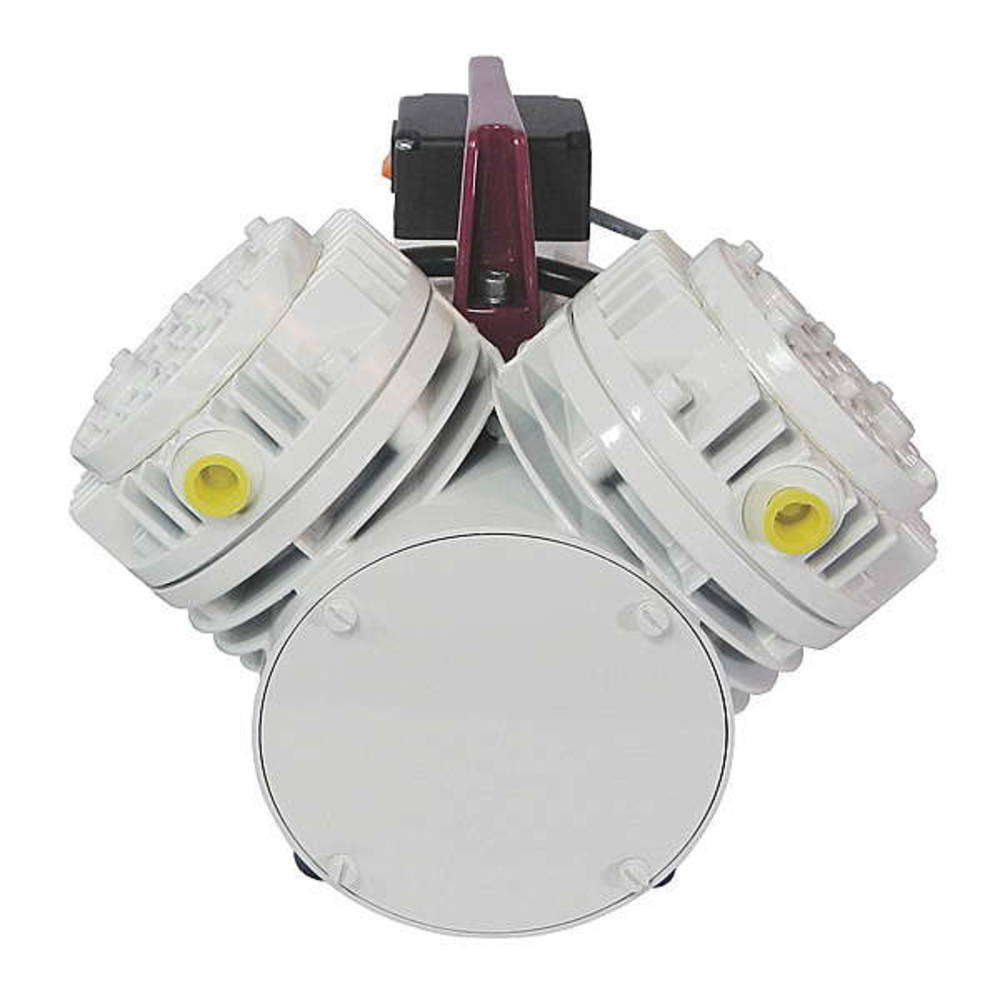
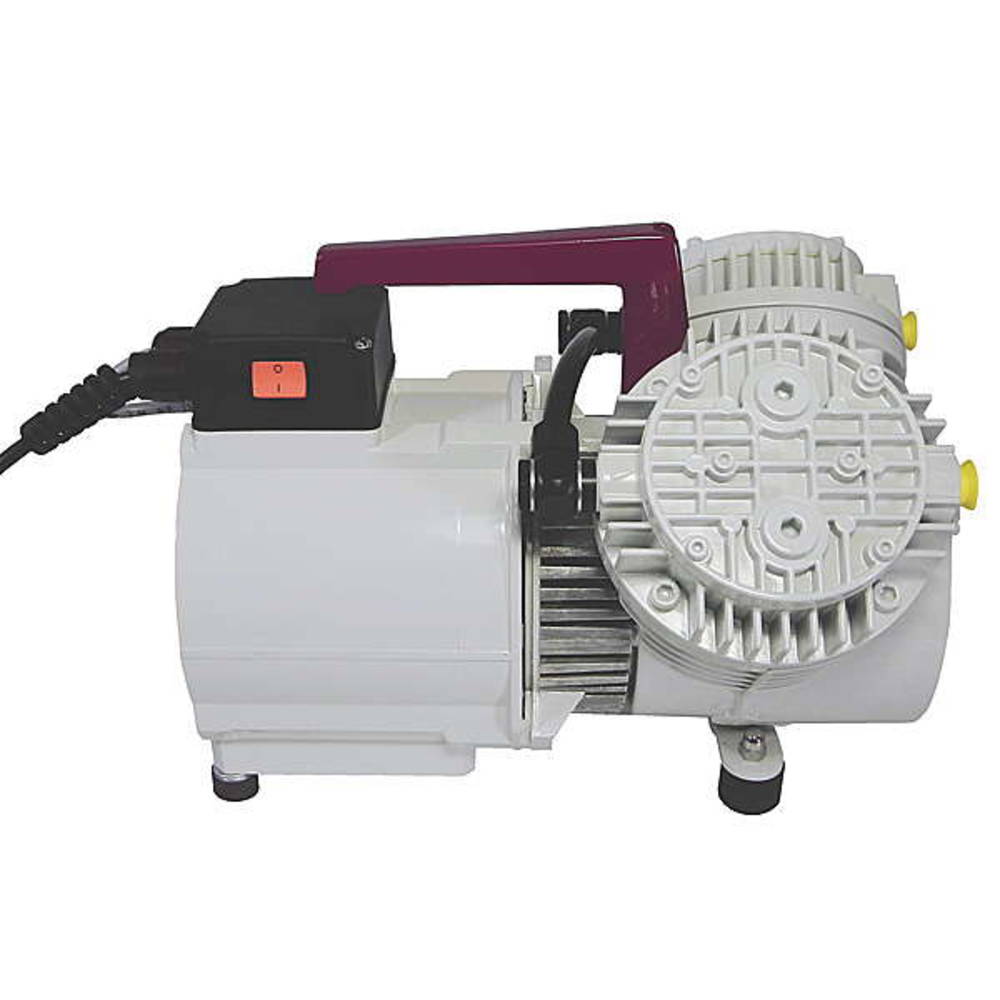
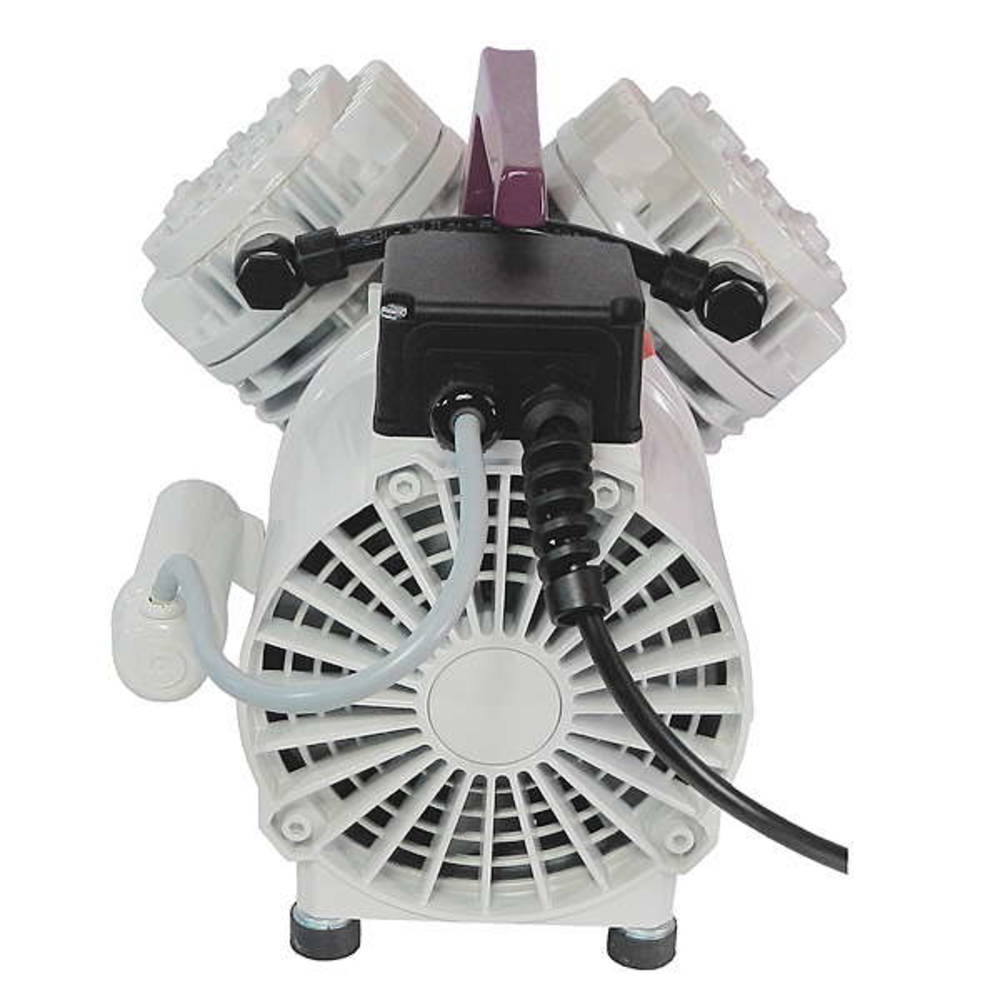
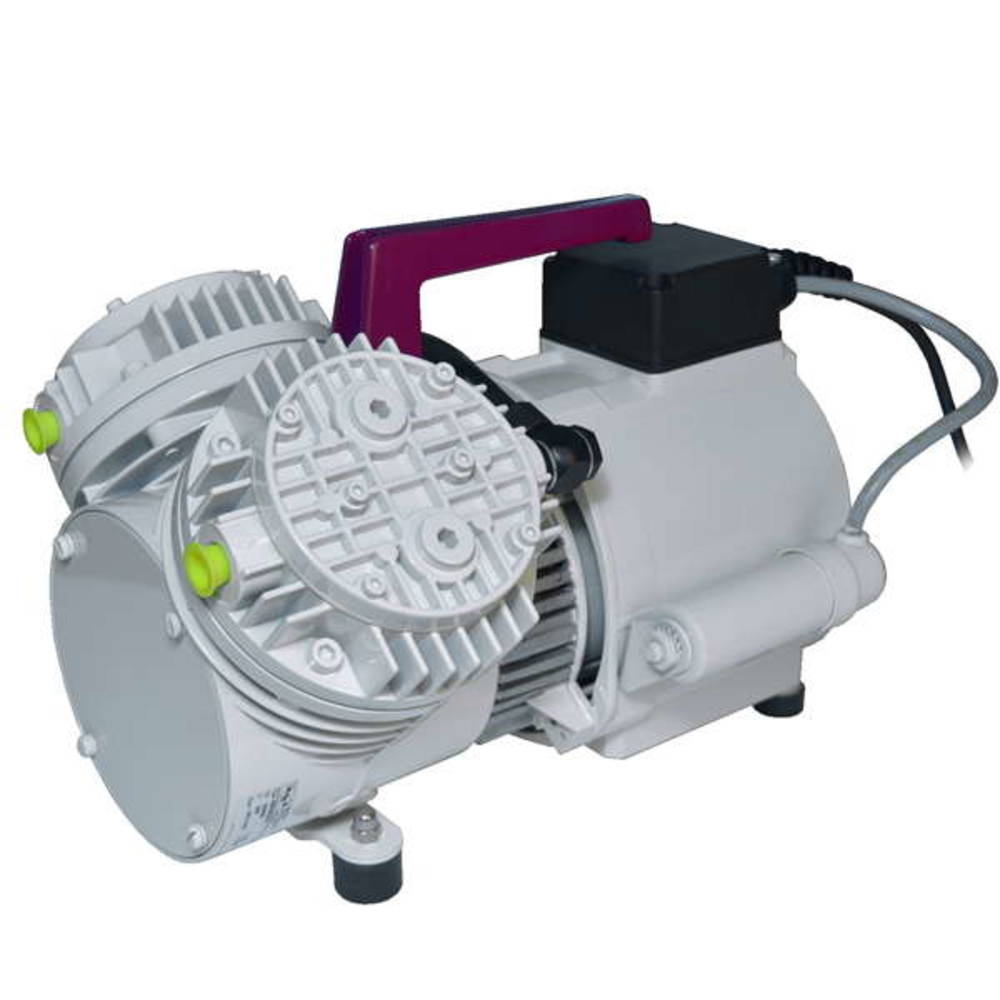
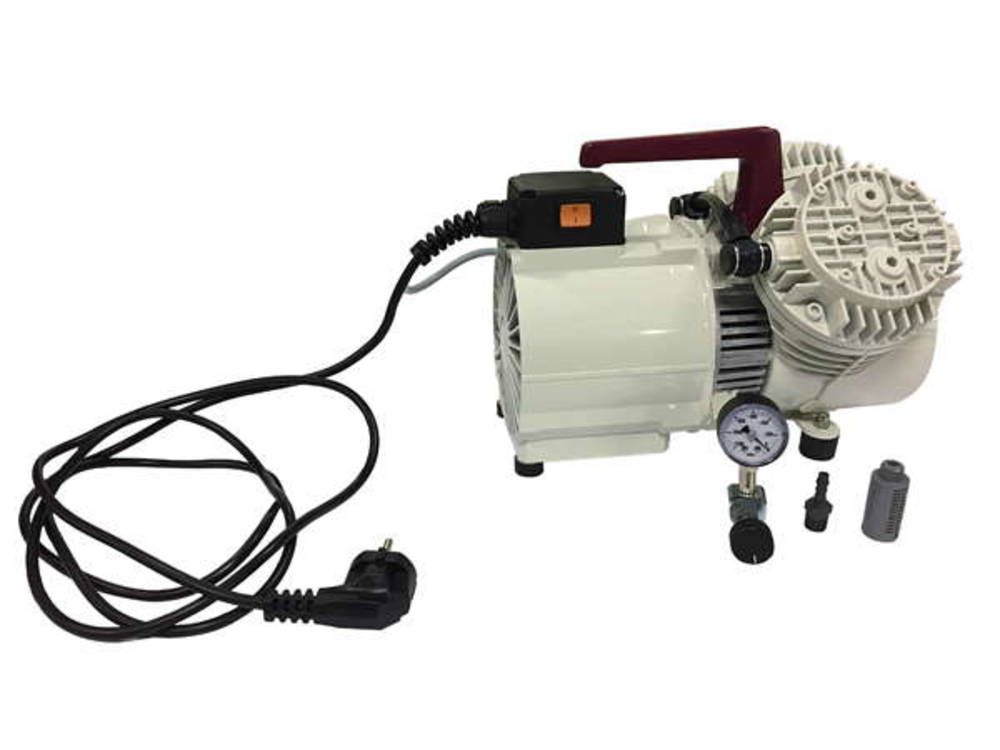
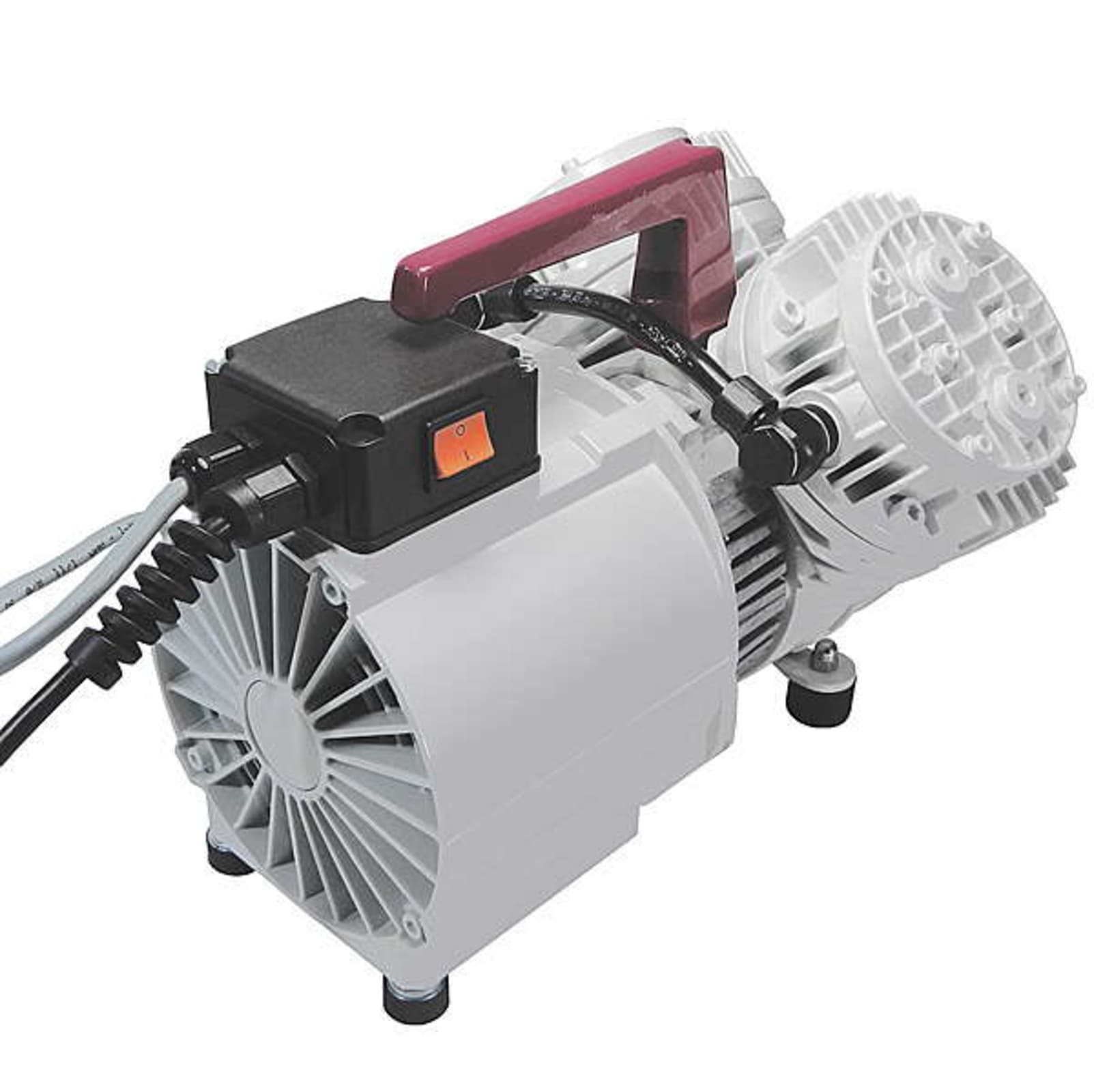
Oil-free diaphragm vacuum pump for vacuum infusion / resin infusion and applications requiring a particularly high vacuum level.
The P3-SPECIAL delivers a pumping speed of 30 l/min and achieves an ultimate pressure of only 13 mbar absolute, corresponding to approx. 0.987 bar vacuum. Unlike the P1-N, P2-N, P3 and VT 4.10, its main advantage is not maximum air throughput, but the ability to achieve a particularly low absolute pressure.
The P3-SPECIAL is specifically designed for processes requiring a significantly higher vacuum level than conventional vacuum bagging applications. Its primary field of use is vacuum infusion / resin infusion.
Simply explained: The lower the absolute residual pressure, the higher the vacuum level. 13 mbar absolute corresponds to approx. 0.987 bar vacuum and therefore represents a significantly higher vacuum than 100 mbar absolute (approx. 0.90 bar vacuum) or 150 mbar absolute (approx. 0.85 bar vacuum). On a conventional vacuum gauge, this is typically indicated as approximately 0.99 bar or −0.99 bar, depending on the scale used.
At 13 mbar absolute, equivalent to approx. 0.987 bar vacuum, the P3-SPECIAL achieves a substantially lower ultimate pressure than the P1-N, P2-N and P3, each rated at 100 mbar absolute (approx. 0.90 bar vacuum), and the VT 4.10 at 150 mbar absolute (approx. 0.85 bar vacuum). This additional vacuum reserve is particularly beneficial when evacuating and leak-testing an infusion setup before resin inlet.
At the same time, its pumping speed of 30 l/min is lower than that of the P3 and VT 4.10. Pump selection should therefore be based on the process: where maximum air throughput is required, the P3 or VT 4.10 are more suitable, whereas the P3-SPECIAL is designed for applications where a high vacuum level is the priority. It is also suitable for evacuating and degassing silicone moulding compounds and similar materials.
Which vacuum pump is the right choice?
P1-N
6 l/min · 100 mbar abs. · approx. 0.90 bar vacuum
Small components, model making and smaller vacuum bagging applications
P2-N
30 l/min · 100 mbar abs. · approx. 0.90 bar vacuum
General-purpose vacuum applications and larger moulds
P3
55 l/min · 100 mbar abs. · approx. 0.90 bar vacuum
Large components and high air extraction capacity
P3-SPECIAL
30 l/min · 13 mbar abs. · approx. 0.987 bar vacuum
Vacuum infusion and particularly high vacuum
VT 4.10
10 m³/h (approx. 167 l/min) · 150 mbar abs. · approx. 0.85 bar vacuum
Very large components, high air throughput and industrial continuous operation
Selection guide: The P3-SPECIAL is the right choice when a particularly high vacuum level is required. As a general rule, the lower the absolute residual pressure, or the higher the vacuum level in bar, the stronger the vacuum. For very large infusion setups, high pumping speed may also be important; in such cases, the balance between evacuation speed and achievable ultimate pressure must be considered.
Features and practical advantages
- Particularly high vacuum: 13 mbar absolute / approx. 0.987 bar vacuum
- 30 l/min pumping speed
- Specifically designed for vacuum infusion / resin infusion
- Also suitable for evacuating and degassing silicone moulding compounds
- Oil-free, dry-running diaphragm pump technology
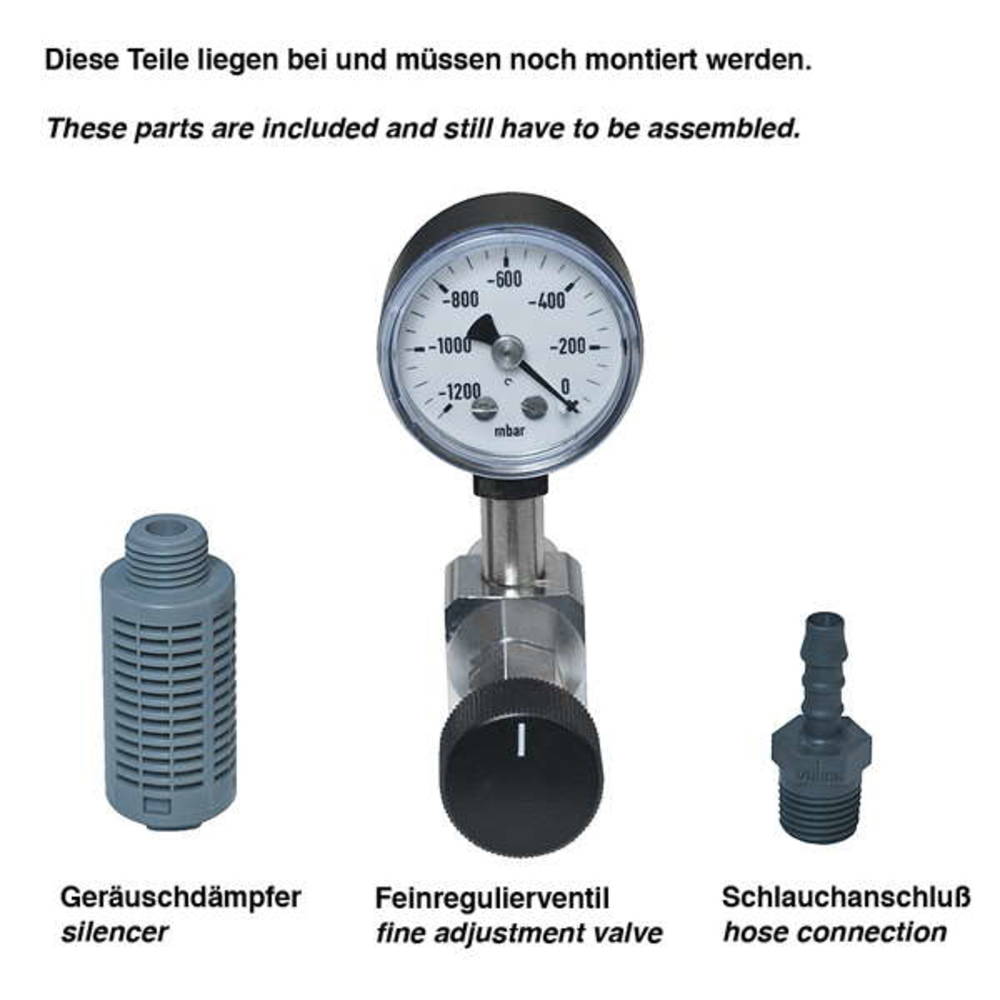
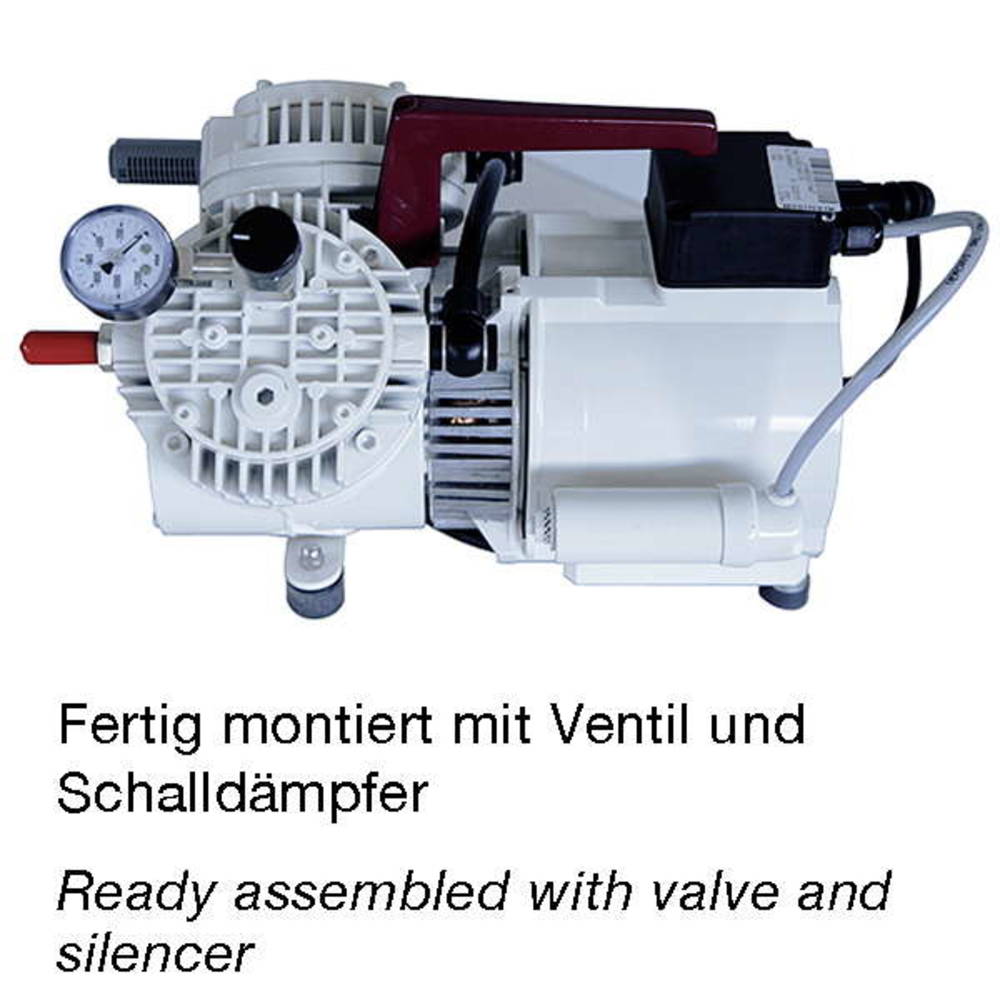
- Fine-control valve and vacuum gauge
- Maintenance-free pump technology
- With thermal switch
Technical data
| Pumping speed | 30 l/min at atmospheric pressure |
| Ultimate vacuum | 13 mbar absolute / approx. 0.987 bar vacuum |
| Power supply | 230 V / 50 Hz |
| Motor power | 300 W |
| Current consumption | 1.55 A |
| Motor protection class | IP 20 |
| Permissible gas and ambient temperature | +5 to +40 °C |
| Weight | 11.3 kg |
| Pump head / diaphragm / valves | Aluminium / CR / stainless steel |
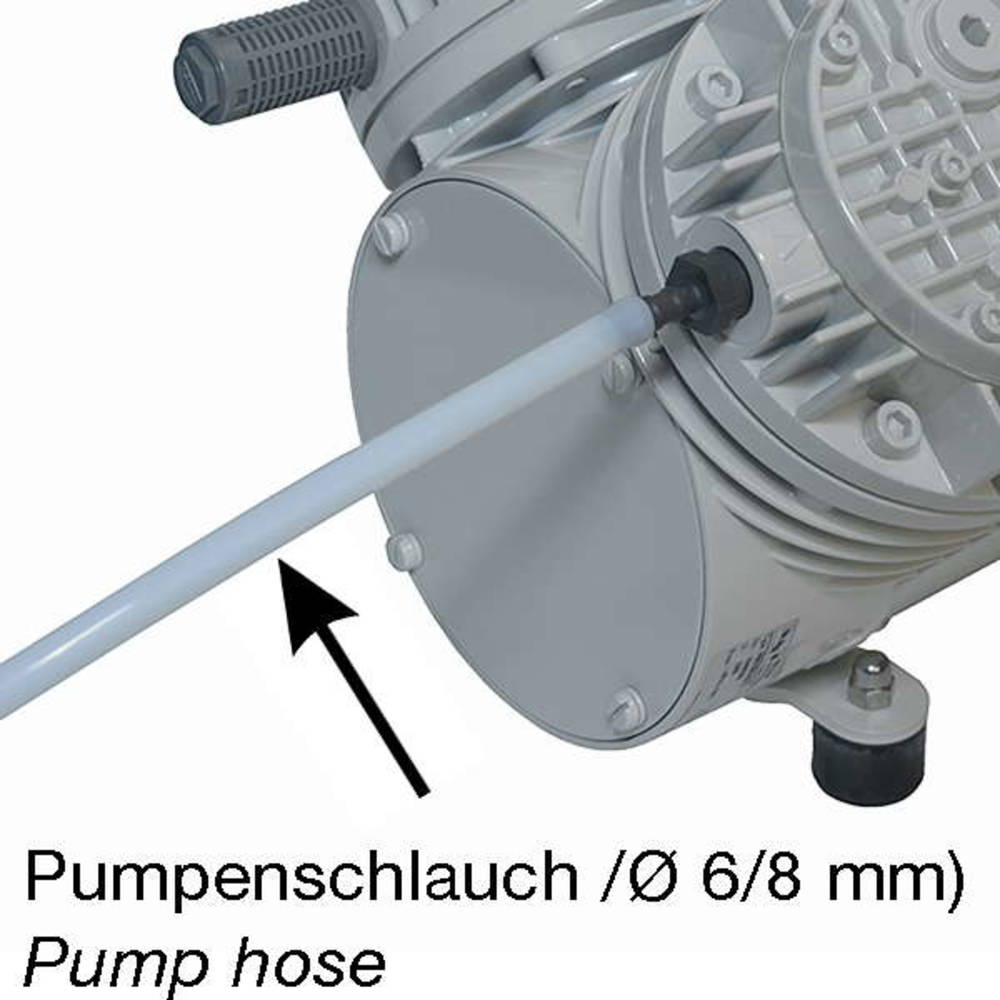
The R&G version is supplied with a silencer, fine-control valve with vacuum gauge and hose connection. To prevent transport damage, some attachments are supplied separately and must be fitted before commissioning in accordance with the installation instructions.
Practical note: The maximum achievable ultimate vacuum is not automatically the correct working vacuum for every component. In vacuum infusion, the vacuum level must be matched to the laminate structure, core material, resin system and process parameters.








 Operating and assembly instructions P3 + P3-Special (PDF)