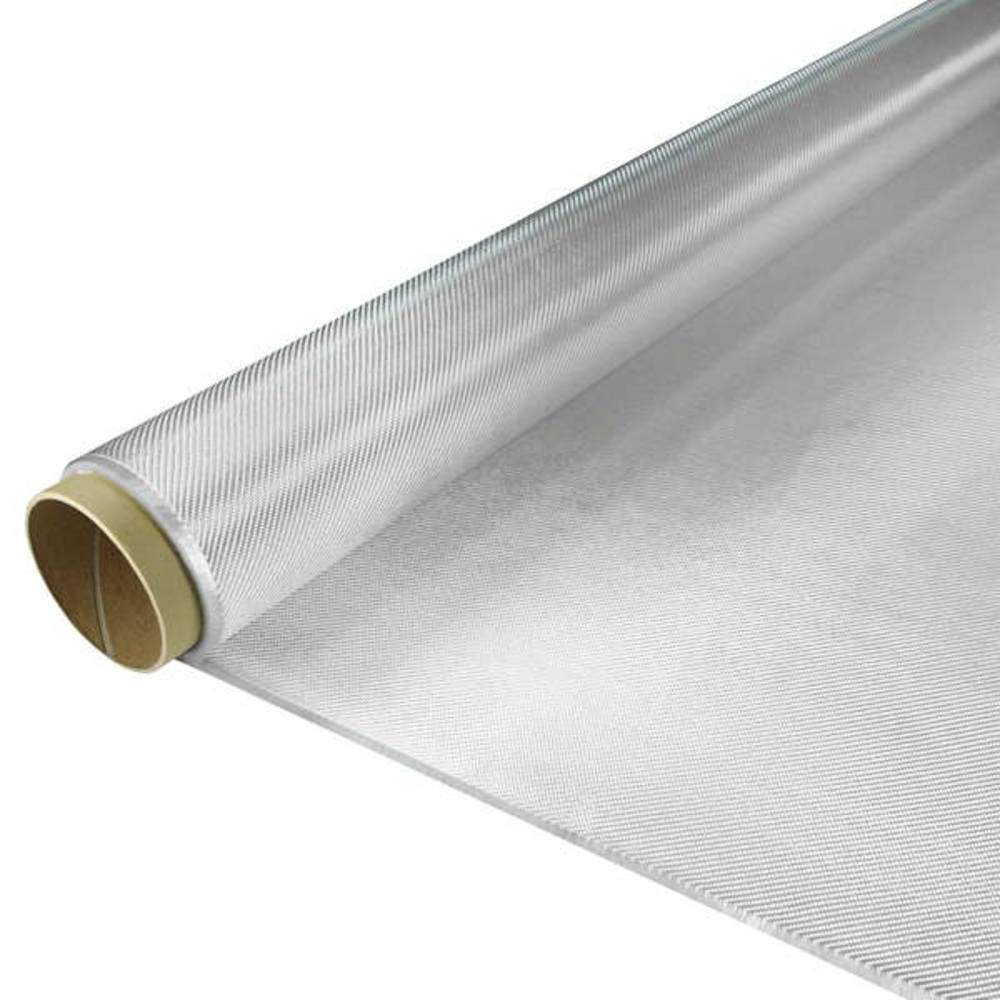
163 g/m² E-glass fabric in a 150 cm width for large, lightweight GFRP components with curved geometries.
The wide version of Interglas 92110 allows larger continuous plies to be cut and can therefore reduce the number of fabric joints and overlap areas. Particularly suitable for fuselage shells, fairings, larger moulded parts and extensive laminate areas in aircraft, ultralight and general composite construction.
MATERIAL IN AVIATION QUALITY
For large GFRP components, the available fabric width can be just as important as the reinforcement construction itself. Interglas 92110 in a width of 150 cm allows wide component areas to be covered with larger continuous plies. At the same time, the twill weave helps the 163 g/m² reinforcement conform to curves and three-dimensional contours.
| Product |
Interglas 92110 |
| Fibre type |
E-glass |
| Areal weight |
163 g/m² |
| Finish |
FK 144 |
| Weave |
Twill |
| Yarn, warp / weft |
EC 9-68 / EC 9-68 |
| Thread count, warp / weft |
12.0 ends/cm / 11.5 picks/cm |
| Width |
150 cm |
Large-Area Laminates with Fewer Fabric Joints
The main advantage of this version is its 150 cm working width. Wide fuselage shells, fairings, panels and moulded components can, depending on their geometry, be covered with larger continuous plies. Compared with a narrower roll width, this can reduce the number of fabric joints and overlap areas required within a laminate layer.
The benefit extends beyond cutting efficiency. Where the component geometry permits, fewer individual pieces can simplify ply preparation, orientation and positioning during lay-up. At the same time, the reinforcement retains the material characteristics of Interglas 92110.
Twill Weave for Curved Components
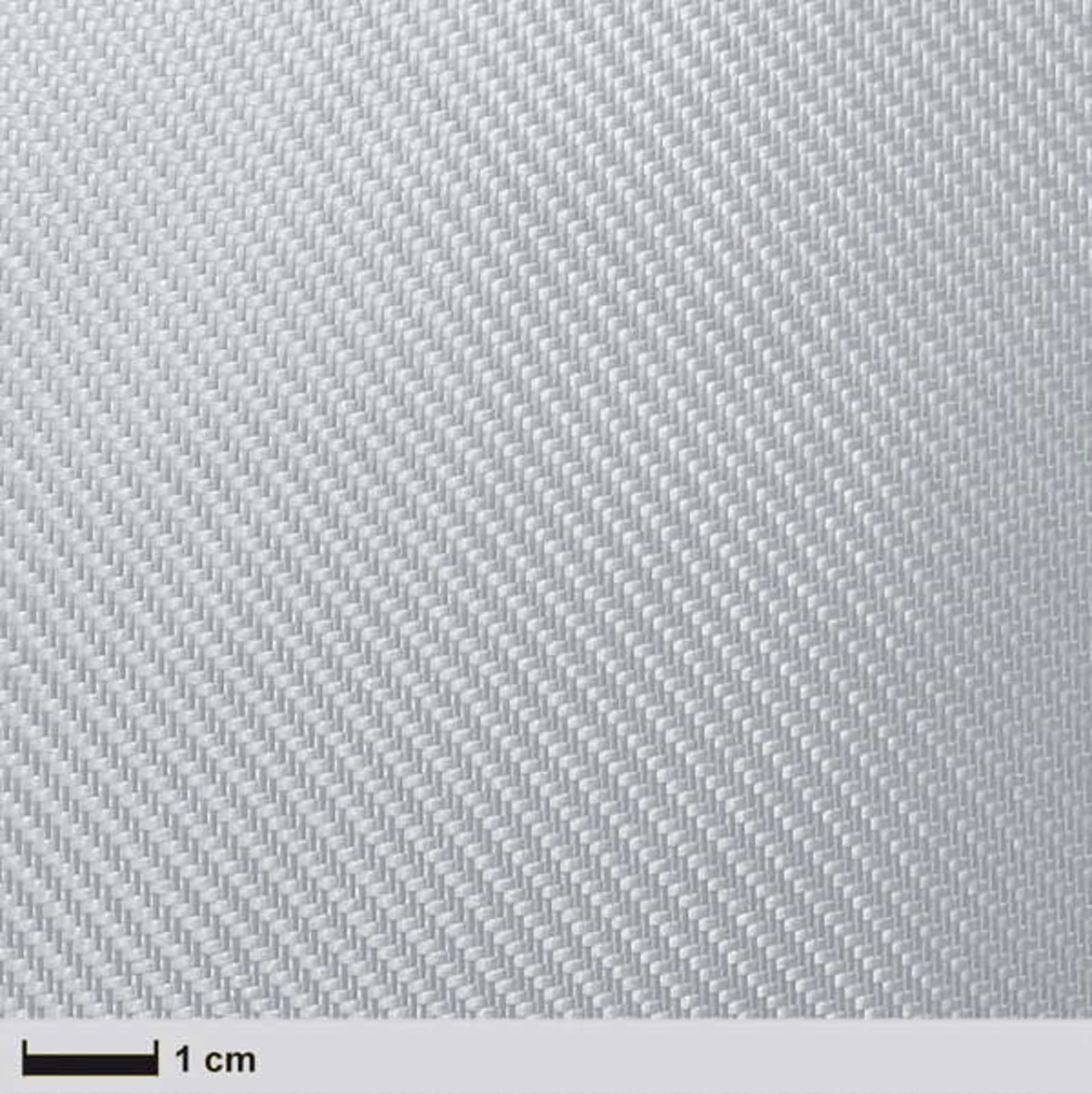
Interglas 92110 is manufactured in a twill weave. Compared with a plain weave, the reduced number of yarn interlacings allows greater movement within the fabric structure. As a result, the reinforcement can conform more readily to radii, curved surfaces and three-dimensional mould geometries.
EC 9-68 glass filament yarn is used in both the warp and weft directions. Thread counts of 12.0 ends/cm and 11.5 picks/cm provide a similar fibre distribution in the two principal fabric directions. The fine fabric construction can be uniformly wetted out with a suitable laminating resin and becomes largely transparent when fully impregnated.
Applications
The 150 cm version is intended particularly for applications requiring larger continuous reinforcement areas. Typical uses include large shell and moulded components in aircraft, ultralight aircraft, model aircraft and general lightweight composite construction.
Typical applications:
- Large fuselage shells
- Aircraft and ultralight aircraft construction
- Fairings and larger moulded components
- Large-area panels and lightweight GFRP shells
- Model fuselages and larger model components
- Surfboards and sports equipment
- Large-area surface reinforcement
- Moulds and foam master models
Suitable Resin Systems
The FK 144 finish is intended for processing with suitable thermosetting resin systems. For structural lightweight components and aviation applications, appropriately specified epoxy resin systems are commonly used.
For large-area lay-up, the viscosity and working time of the resin system should be matched to the component size and manufacturing process. Sufficient working time facilitates complete and uniform wet-out of larger fabric areas before the resin begins to gel.
Calculated Data for Hand Lay-Up Laminates with 35 Vol.-% Fibre Content
| Resin consumption |
128 g/m² |
| Laminate thickness |
0.179 mm |
| Laminate weight |
291 g/m² |
Benefits of the 150 cm Width
The additional width is particularly useful where a component would require several adjacent plies when using 100 cm wide fabric. With a working width of 150 cm, substantially wider areas can be covered with a single continuous ply.
For fuselage shells, larger fairings and wide laminate areas, this can reduce the number of longitudinal joints and overlaps. Whether a component can actually be covered in one piece depends on its developed geometry, specified fibre orientation and laminate lay-up.
Technical Notes
Handling Wide Plies
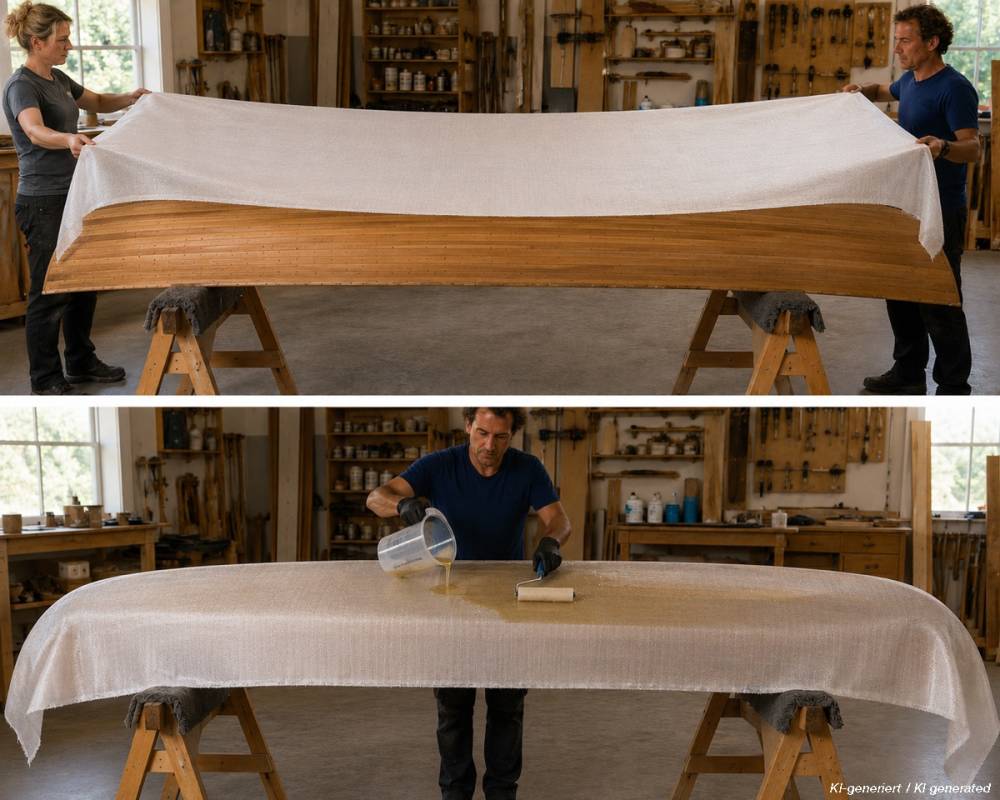
For 150 cm wide fabric plies, a sufficiently large, clean cutting surface is recommended. Large cut pieces should be picked up and transferred to the mould evenly to minimise unwanted yarn displacement and distortion.
Draping
The twill construction assists conformity to curved contours. On complex geometries, the fabric should be positioned progressively from a defined area and laid down with minimal wrinkling without unnecessarily distorting the weave.
Resin Processing
For larger laminate areas, the required resin quantity, pot life and working sequence should be planned before lay-up begins. The reinforcement must be completely wetted out, while unnecessary excess resin should be avoided.
Calculated Laminate Data
The stated values are calculated for a hand lay-up laminate with a fibre volume fraction of 35%. Values achieved in practice depend on the resin system, manufacturing process, degree of consolidation and actual fibre volume fraction.
Automotive Applications
TÜV-recognised laminate lay-ups are available for automotive applications using this glass fabric. The specified processing instructions and laminate configurations must be observed for these applications.
Aviation Applications
The aviation quality of the fabric does not in itself constitute approval of the finished laminate or component. For aviation applications, the specified laminate construction, resin system, manufacturing process and applicable approval requirements must be observed.








 MSDS Interglas Glass fabric (PDF)